Best Way to Learn Digital Marketing: A Complete Beginner’s Guide (2026)
Are you looking for the best way to learn digital marketing but feel lost about where to begin? You are not alone. Every day, thousands of beginners search for the same question on Google, and most end up with a list of courses that cost thousands of rupees. This often leaves them more confused than before.
At MarketYug, we believe digital marketing should be simple, practical, and available to everyone. This includes college students, small business owners, and those looking to change careers in 2026.
In this complete guide, you will learn the best way to learn digital marketing step by step. You will understand the different types of digital marketing, discover five benefits of digital marketing, and examine its advantages and disadvantages. By the end of this post, you will have a clear roadmap to start your journey for free from home.
What Is Digital Marketing? (Simple Definition for Beginners)
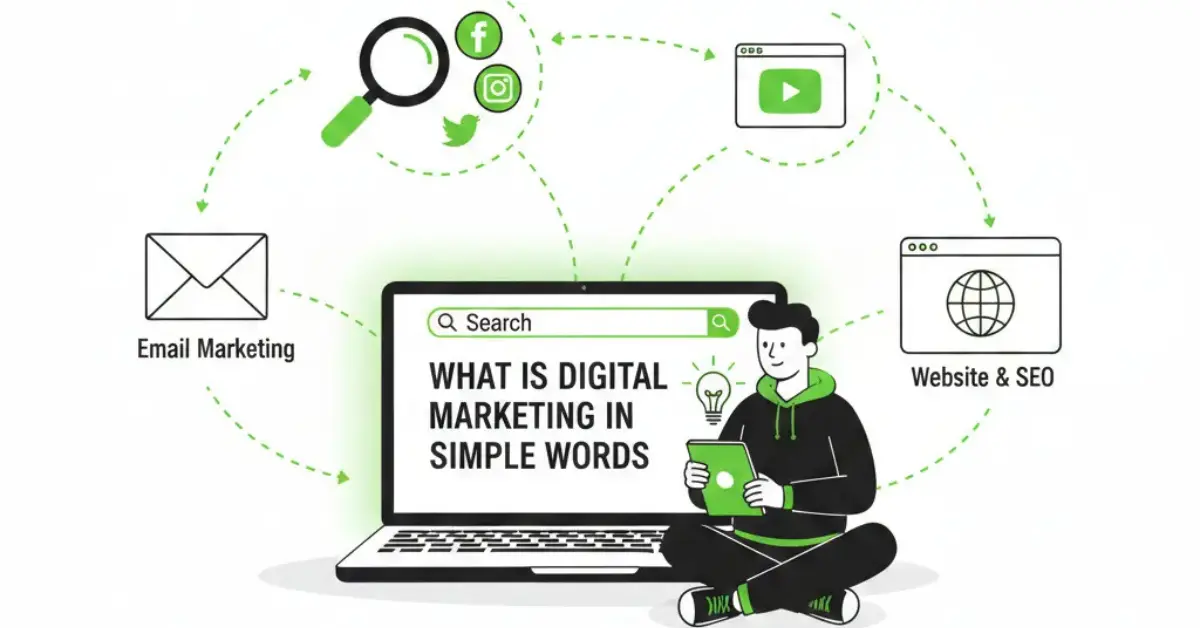
Digital marketing is the process of promoting a product, service, or brand using the internet and digital channels. These channels include search engines, social media platforms, emails, websites, and mobile apps.
In simple terms, if a business uses Google, Facebook, Instagram, YouTube, or email to reach its customers, it is engaging in digital marketing.
Unlike traditional marketing channels such as TV ads, newspapers, and billboards, digital marketing allows even a small business owner in Jaipur to reach customers across India and around the world on a very low budget.
MarketYug Tip: You do not need a big company or a large budget to do digital marketing. A smartphone, an internet connection, and the right knowledge are enough to get started.
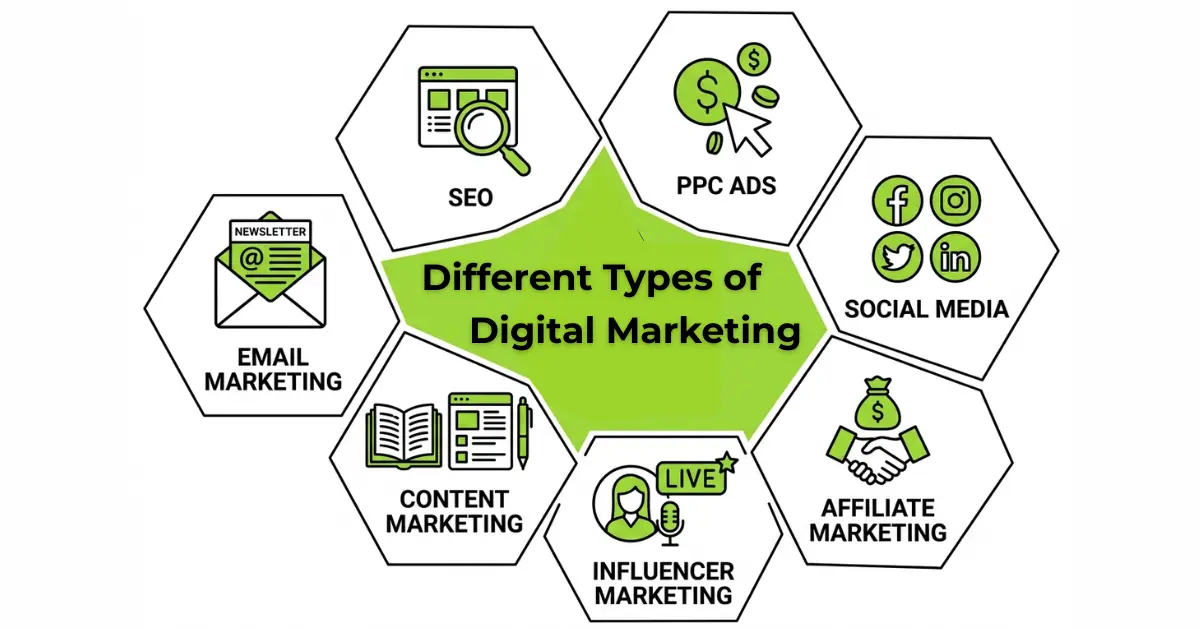
Different Types of Digital Marketing
Before you start learning, it is important to understand the different types of digital marketing. This will help you decide which area to focus on first.
1. Search Engine Optimization (SEO)
Search Engine Optimization is the practice of optimizing your website so it appears higher in Google search results without paying for ads. It is one of the most effective and lasting forms of digital marketing. If you want free, consistent traffic to your website, you must learn SEO first.
2. Social Media Marketing (SMM)
SMM involves using platforms like Instagram, Facebook, LinkedIn, YouTube, and Twitter/X to build an audience, promote content, and drive traffic or sales. In 2026, short-form video content on Instagram Reels and YouTube Shorts is taking over SMM strategy.
3. Content Marketing
Content marketing focuses on creating valuable blogs, videos, infographics, and podcasts that attract and educate your target audience. The MarketYug blog you are reading right now is a result of content marketing.
4. Email Marketing
Email marketing is about sending targeted emails to a list of subscribers to nurture them, share offers, or deliver useful content. It still offers one of the highest returns on investment (ROI) in digital marketing.
5. Pay-Per-Click Advertising (PPC)
PPC involves running paid ads on Google, YouTube, Facebook, or Instagram and paying only when someone clicks your ad. Google Ads and Meta Ads are the two main PPC platforms for beginners to learn.
6. Affiliate Marketing
In affiliate marketing, you promote someone else’s product and earn a commission for every sale made through your referral link. Many Indian creators and bloggers earn a full-time income through affiliate marketing.
7. Influencer Marketing
Brands work with social media influencers to promote their products to a targeted audience. As an influencer or brand marketer, understanding this channel is crucial in 2026.
Best Way to Learn Digital Marketing Step by Step (2026 Roadmap)
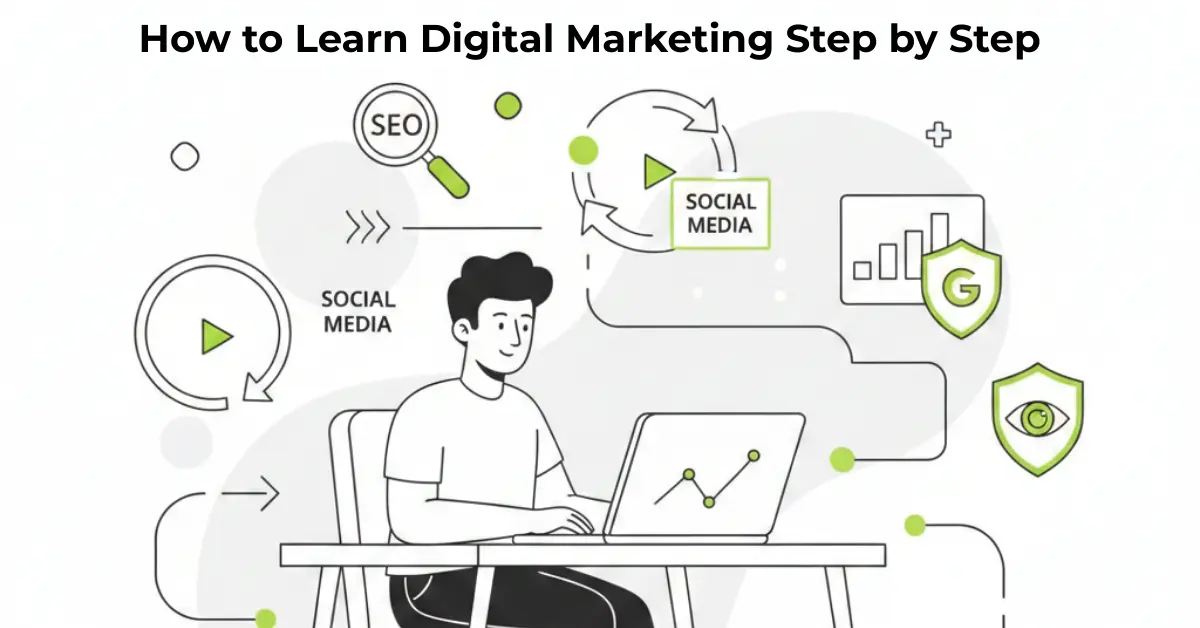
Now comes the most important part of this guide. This is the best way to learn digital marketing step by step. This practical roadmap is designed specifically for beginners in 2026. Follow these steps in order, and you will be ready for a job or freelance work within six to twelve months.
Step 1: Build a Strong Foundation First
Before jumping into tools and techniques, you need to understand how the internet works, what is Digital Marketing, what SEO means, and how people find content online. Spend two to three weeks reading beginner articles on MarketYug and watching free YouTube videos on the basics of digital marketing.
Understand the marketing funnel. It explains how a stranger becomes a visitor, then a lead, and finally a customer. This mindset is the foundation for everything else you will learn.
Step 2: Choose One Area to Start With
The most common mistake beginners make is trying to learn everything all at once. Digital marketing has many branches: SEO, SMM, PPC, Email, Content, Affiliate, and more. Pick just one to start.
If you enjoy writing, start with SEO and Content Marketing, like visuals and social media, start with SMM, or if you want quick results and are okay with a budget, start with PPC ads.
Step 3: Take Free Certified Courses
In 2026, there are plenty of free, high-quality courses available online. Here are the best ones:
- Google Digital Garage: covers digital marketing basics with a free certification
- HubSpot Academy: excellent free courses on content marketing, email, and inbound strategy
- Meta Blueprint: free courses on Facebook and Instagram advertising
- Google Skillshop: free Google Ads and Analytics certifications
- Semrush Academy: free SEO and keyword research courses
Complete at least two or three certifications in your chosen area. These will enhance your resume and LinkedIn profile.
Step 4: Learn the Essential Tools
Digital marketers use specific tools every day. Knowing these tools will make you much more productive and employable:
- SEO: Google Search Console, Ahrefs, Semrush, Ubersuggest
- Social Media: Meta Business Suite, Buffer, Later, Canva
- Paid Ads: Google Ads, Meta Ads Manager
- Email Marketing: Mailchimp, ConvertKit, Brevo
- Analytics: Google Analytics 4 (GA4), Hotjar
- Content: WordPress, Grammarly, ChatGPT (for research)
You do not need to master all of them at once. Learn the tools that are relevant to your chosen area first.
Step 5: Practice on a Real Project
This is the most important step. Theory without practice means nothing in digital marketing. The best way to actually learn is by doing.
Start a free blog on WordPress.com or Blogger, and practice writing SEO-optimized content. Create a free Instagram or LinkedIn page, and practice social media content. Run a small Meta Ads campaign with even ₹500 to understand how paid advertising works.
Having a real project gives you practical experience that you can show to future clients or employers.
Step 6: Follow Industry Experts and Stay Updated
Digital marketing changes quickly. What worked in 2023 may not work in 2026. Make it a habit to follow trusted sources:
- MarketYug blog: for beginner-friendly guides in simple language
- Neil Patel blog: for advanced SEO and content marketing tips
- Search Engine Journal: for the latest SEO and PPC news
- Social Media Examiner: for social media marketing updates
- Google’s own blog: for algorithm updates and search news
Follow these regularly, and you will always stay ahead of the curve.
Step 7: Build Your Portfolio and Personal Brand
Once you have learned the basics and practiced on a real project, it is time to build your portfolio. Document your results. How much traffic did your blog get? How many followers did your social media page gain? What was the ROI on your ad campaign?
Create a simple portfolio website or a Google Doc that showcases your work. Start sharing your knowledge on LinkedIn, write posts about what you learned, and engage with others in the digital marketing community. Building your personal brand is a form of digital marketing itself.
5 Benefits of Digital Marketing in 2026
One of the first questions beginners ask is, ” Why should I learn digital marketing? Here are the 5 most important benefits of digital marketing that make it one of the best skills to have in 2026.
Benefit 1: Massive Reach at Low Cost
A single Instagram post or a well-written blog can reach thousands of people without spending any money on ads. Digital marketing breaks geographical barriers. A bakery in Jaipur can now attract customers from Delhi, Mumbai, or even Dubai.
Benefit 2: Highly Targeted Audience
Unlike a newspaper ad that goes to everyone, digital marketing lets you target exactly who you want, by age, location, interest, gender, income level, and even online behaviour. This means your message reaches the right people at the right time.
Benefit 3: Measurable and Trackable Results
Every digital marketing campaign provides real data. You can see how many people saw your ad, clicked it, visited your website, and made a purchase. Tools like Google Analytics, Meta Ads Manager, and Google Search Console give you complete transparency.
Benefit 4: Cost-Effective Compared to Traditional Marketing
Running a full-page newspaper ad or a TV commercial can cost lakhs of rupees. A digital marketing campaign, on the other hand, can be started with as little as ₹200 per day and can still deliver significant results for small businesses and startups.
Benefit 5: Opens Multiple Career Opportunities
Learning digital marketing opens doors to freelancing, full-time jobs at agencies or companies, starting your own business, creating and monetizing content, or offering digital marketing services to local businesses. The demand for digital marketers in India is growing faster than ever in 2026.
Advantages and Disadvantages of Digital Marketing
To give you a clear view, let us examine both sides. Understanding the pros and cons of digital marketing will help you have realistic expectations.
Advantages of Digital Marketing
- Global reach: your content can be found by anyone, anywhere.
- 24/7 visibility: your website and social media are active even when you are not.
- Personalization: you can send different messages to different audience segments.
- Faster result: paid campaigns can drive traffic within hours.
- Level playing field: a startup can compete with a large brand with a smart strategy.
- Low entry barrier: you can start learning and practicing for free.
Disadvantages of Digital Marketing
- High competition: almost every business is now doing digital marketing, making it harder to stand out.
- Algorithm dependency: one change in Google or Instagram’s algorithm can impact your traffic overnight.
- Steep learning curve: you need to keep updating your skills as platforms change.
- Time to see results: SEO and content marketing typically take 3 to 6 months to show significant results.
- Risk of negative feedback: a single bad review or a viral complaint can harm a brand’s reputation quickly.
- Data privacy concerns: growing awareness of data privacy and rules like GDPR affect how marketers gather and use user data.
MarketYug Takeaway: No marketing channel is perfect. But when done well, the benefits of digital marketing far outweigh its drawbacks. The key is to begin with the right knowledge and a consistent strategy.
Can I Learn Digital Marketing on My Own for Free?
Yes, absolutely. In 2026, self-learning is not just possible; it is the preferred method for many successful digital marketers. All the major platforms, including Google, Meta, and HubSpot, provide free, top-notch certifications.
Key ingredients for self-learning include:
- Consistency: Spend at least 30 to 60 minutes every day learning and practicing.
- Curiosity: Always ask why something works, not just how.
- Application: Immediately apply what you learn to a real project.
- Community: Join Facebook groups, Reddit communities, or Discord servers focused on digital marketing.
Thousands of successful freelancers and marketing professionals in India got started this way—with free resources, YouTube videos, and a laptop.
How Long Does It Take to Learn Digital Marketing?
This is one of the most common questions beginners ask.
Here is an honest breakdown:
- Digital marketing basics: 2 to 4 weeks of consistent learning.
- One specialization (e.g., SEO or SMM): 2 to 3 months.
- Freelance-ready or internship-ready: 3 to 6 months.
- Job-ready with a strong portfolio: 6 to 12 months.
Remember, these timelines assume you are practicing daily and not just passively watching videos. The more you actively apply your learning, the faster you will grow.
Reality Check: Digital marketing is a skill that you never stop learning. Even experienced professionals with 10 years of experience continuously update their knowledge because the industry evolves every year.
Common Mistakes Beginners Make While Learning Digital Marketing
Avoid these pitfalls that slow down many beginners:
1. Trying to learn everything at once. Pick one area and go deep before branching out.
2. Learning only theory without any practice. Always apply what you learn immediately.
3. Skipping SEO basics and jumping to paid ads. SEO is the foundation; do not skip it.
4. Not tracking results. Always measure what is working and what is not.
5. Giving up too early. SEO and content marketing take time; results rarely come in the first 30 days.
6. Following outdated advice. Always check the publish date of any article you read; digital marketing changes fast.
7. Ignoring analytics. Data is your best friend in digital marketing; learn Google Analytics from day one.
Digital Marketing Career Opportunities in 2026
The demand for skilled digital marketers in India is at an all-time high in 2026.
Here are the career paths available after learning digital marketing:
- SEO Specialist: Salary range ₹2.5 LPA to ₹10 LPA depending on experience.
- Social Media Manager: In demand at brands, agencies, and startups.
- Content Marketing Manager: High demand as brands invest heavily in content.
- PPC/Google Ads Expert: Excellent earning potential as a freelancer or employee.
- Digital Marketing Executive: Entry-level role at agencies or companies.
- Freelance Digital Marketer: Work with multiple clients from home.
- Blogger or Content Creator: Monetize through ads, affiliates, and brand deals.
With the right skills and portfolio, you can land your first digital marketing internship or freelancing client within 3 to 6 months of starting your learning journey.
Conclusion: Start Your Digital Marketing Journey Today
The best way to learn digital marketing is not about finding the perfect course or waiting for the right time. It is about starting today with the resources you already have: your smartphone, internet, and free online tools.
In this guide, you learned what digital marketing is, the different types of digital marketing, the five benefits of digital marketing, the honest advantages and disadvantages of digital marketing, and a complete step-by-step roadmap to progress from beginner to job-ready.
At MarketYug, our mission is to make digital marketing simple and understandable for every beginner in India. Bookmark this guide, follow the steps one by one, and practice consistently. Your first digital marketing success whether it’s your first 1,000 organic website visitors, your first 500 Instagram followers, or your first freelancing client, is closer than you think.
If you want to Learn Digital Marketing, go with Marketyug blog: How to learn digital marketing step by step
Your Next Step: Pick one area of digital marketing from this guide, enrol in one free course today, and start a real project this week. That is the best way to learn digital marketing.