How to Start Social Media Marketing: A Complete Beginner’s Guide
If you have ever scrolled through Instagram or LinkedIn and wondered how brands turn followers into customers, you are not alone. Each month, thousands of beginners look for ways to start social media marketing. The good news is that you don’t need a large budget or a marketing degree to begin. You just need the right roadmap.
At MarketYug, we think digital marketing should be simple to understand, even if you are starting from scratch. In this guide, you will learn how to start social media marketing step by step, along with the benefits, features, real campaign examples, and tools that make the process easier in 2026.
By the end of this post, you will have a clear plan to begin your own social media marketing journey. This plan can help you promote a business, build a personal brand, or start a career in digital marketing.

What is Social Media Marketing?
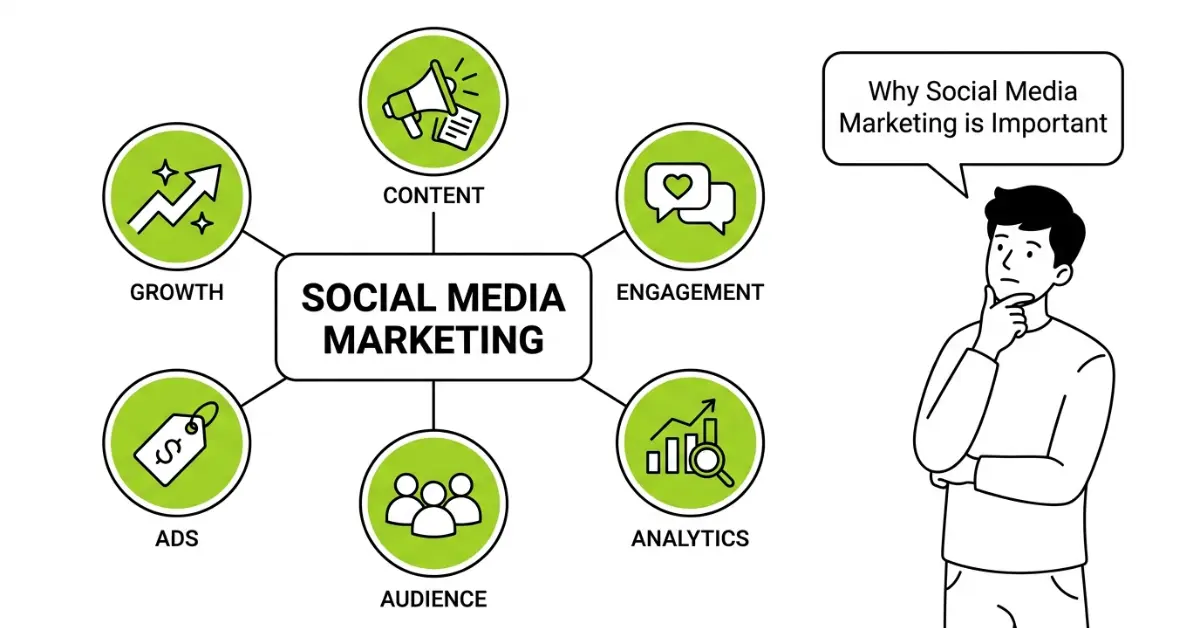
Social media marketing involves using platforms like Instagram, Facebook, LinkedIn, YouTube, and X (formerly Twitter) to promote a brand, product, or service, while building relationships with an audience. It includes activities like creating content, running paid ads, engaging with followers, and analyzing performance to improve results over time.
In simple terms, social media marketing is about being where your audience already spends their time. It gives them a reason to notice you, trust you, and eventually buy from you.
Unlike traditional advertising, social media marketing allows two-way communication. Your audience can comment, share, and message you directly. This makes it a powerful tool for building long-term relationships rather than just making one-time sales.
This is exactly why so many beginners want to learn how to start social media marketing today. It is affordable, measurable, and accessible to anyone with a smartphone and an internet connection.
Why Learn Social Media Marketing in 2026?
Social media is no longer optional for businesses. It has become a main channel where people discover new brands, read reviews, and make purchase decisions. Here’s why learning social media marketing in 2026 makes sense.
1. High demand for skilled marketers
Businesses of all sizes, from local shops to global brands, need people who understand how to run social media campaigns. This creates strong career opportunities for beginners who take the time to learn the basics properly.
2. Low cost of entry
You do not need expensive tools or a large team to start. Many platforms offer free scheduling, analytics, and design tools that let you begin social media marketing with almost no upfront investment.
3. Short-form video and AI tools are changing the game
Platforms are focusing on short-form video content. AI-powered tools now help creators write captions, generate ideas, and analyze performance more quickly than ever. Beginners who know how to use these tools have a real edge.
4. Remote and freelance opportunities
Social media marketing skills let you work as a freelancer, consultant, or in-house marketer from anywhere in the world. This flexibility is a major reason why beginners are drawn to this field.
5. Direct connection with customers
Social media gives brands a direct line to their audience, something traditional advertising could never offer. Learning how to start social media marketing means learning how to build that connection effectively.
Features of Social Media Marketing
Before you start, it helps to understand the main features of social media marketing. These features set it apart from other types of advertising.
- Two-way communication: Brands can talk directly with their audience through comments, messages, and live sessions.
- Content variety: You can use images, videos, reels, stories, carousels, and live streams to share your message.
- Targeted advertising: Paid ads let you target audiences based on age, location, interests, and online behaviour.
- Real-time analytics: Every platform provides data on reach, engagement, and conversions, so you can see what is working.
- Cost flexibility: You can start with free organic content or expand with paid campaigns as your budget allows.
- Community building: Social media allows you to create a loyal community around your brand instead of just an audience.
- Viral potential: Good content can spread quickly, giving small brands the chance to reach a large audience without a big budget.
Understanding these features will help you make smarter decisions when you create your own strategy.
Benefits of Social Media Marketing
Many beginners wonder if learning this skill is truly worth the effort. Here are the key benefits of social media marketing that answer that question.
1. Increased brand awareness
Consistent posting helps more people recognize your brand, products, and values over time.
2. Better customer engagement
Social media lets you answer questions, address concerns, and build trust with your audience in real time.
3. Cost-effective marketing
Compared to traditional advertising like TV or print, social media marketing offers a much lower cost per result, especially for small businesses and beginners.
4. Higher website traffic
Sharing blog posts, product pages, and offers on social media can bring steady traffic back to your website.
5. Valuable customer insights
Analytics tools show you exactly what your audience likes, letting you refine your content and offers.
6. Improved search visibility
While social signals do not directly affect rankings, an active social presence increases brand searches and content visibility, which supports your overall digital marketing efforts.
7. Career and business growth
Whether you want a job, freelance clients, or to grow your own business, these benefits of social media marketing make it one of the most valuable skills to learn today.
How to Start Social Media Marketing: Step by Step
Now let’s get into the main part of this guide. Here’s a straightforward process for starting social media marketing, even if you’re new to it.
Step 1: Define Your Goals
Before you make your first post, think about what you want to achieve. Common goals include:
- Building brand awareness
- Generating leads or sales
- Growing a personal brand
- Driving traffic to a website or blog
Your goals will shape every choice you make later, from selecting platforms to the kind of content you create. This sets the groundwork for effective social media marketing.
Step 2: Choose the Right Platform
Not every platform is right for every brand. Consider where your target audience spends their time.
- Instagram: Best for visual brands, lifestyle, fashion, food, and new personal brands.
- Facebook: Great for local businesses, community building, and slightly older audiences.
- LinkedIn: Ideal for B2B marketing, professional services, and career-focused content.
- YouTube: Perfect for long-form and short-form videos that establish authority.
- X (Twitter): Useful for real-time updates, news, and industry discussions.
Beginners often try to be active on every platform at once. Start with one or two platforms and master those before expanding.
Step 3: Understand Your Target Audience
Research your audience’s age, interests, pain points, and preferred content types. Look at competitor pages and note what gets the most likes, comments, and shares. This research directly informs your content strategy.
Step 4: Create a Content Strategy
A content strategy is a plan for what you will post, when you will post it, and why. Include a mix of:
- Educational content (tips, how-tos)
- Entertaining content (trends, humor, relatable posts)
- Promotional content (offers, launches, testimonials)
- Behind-the-scenes content (builds trust and authenticity)
A good guideline for beginners is the 80/20 rule: 80 percent value-driven content, 20 percent promotional content.
Step 5: Set a Posting Schedule
Consistency matters more than how often you post. Use a simple content calendar to plan your posts ahead of time, so you’re not scrambling for ideas every day. Most beginners start with three to five posts per week and adjust based on results.
Step 6: Use the Right Tools
Free and low-cost tools can save you time each week. We’ll discuss the best beginner tools in the next section.
Step 7: Publish and Engage Consistently
Posting is only part of the job. Respond to comments, answer messages, and engage with other accounts in your niche. Engagement builds the relationships that make social media marketing work.
Step 8: Track Performance and Improve
Check your analytics weekly. Look at which posts had the most reach and engagement, then create more content like that. This ongoing cycle of posting, measuring, and improving is the real key to long-term success.
Social Media Campaign Examples
Looking at real campaign examples can help you see what effective social media marketing looks like in practice.
1. User-generated content campaigns
Many apparel and beauty brands encourage customers to share photos using their products with a branded hashtag. This builds trust because potential buyers see real people using the product, not just polished ads.
2. Cause-driven storytelling
Some of the most memorable campaigns focus on empowering messages rather than direct product promotion. This helps brands connect emotionally with a wide audience and build long-term loyalty.
3. Local business community campaigns
Small businesses often run simple contests, such as asking followers to tag a friend or share a post for a chance to win a product. These campaigns are low-cost but highly effective for reaching people at the local level.
4. Influencer collaboration campaigns
Brands partner with specific influencers whose followers match their target audience. This often performs better than working with celebrities since it feels more authentic and relatable.
5. Educational content series
Many beginner-friendly brands build authority by publishing short, consistent educational content, such as quick tips or myth-busting posts. This positions them as experts in their field over time.
Studying these types of campaigns will give you ideas you can use for your own brand, even with a small budget.
Best Free Tools to Start Social Media Marketing
- Canva: For designing posts, stories, and reels without any design experience.
- Meta Business Suite: For scheduling and managing Facebook and Instagram content in one place.
- Buffer or Later: For planning and scheduling content across multiple platforms.
- Google Analytics: For tracking traffic that comes from your social media links.
- ChatGPT or Claude: For brainstorming content ideas and writing captions quickly.
These tools make it much easier for beginners to stay consistent without spending money on expensive software.
Common Mistakes Beginners Make in Social Media Marketing
- Trying to be active on every platform at once instead of focusing.
- Posting only promotional content without offering value.
- Ignoring analytics and never adjusting strategy.
- Being inconsistent with posting schedules.
- Copying competitors instead of building an original voice.
- Expecting immediate results instead of committing to long-term progress.
Avoiding these mistakes will save you time and allow you to see real progress more quickly.
How to Start a Career in Social Media Marketing
If your goal is a career rather than just promoting your own brand, here is a simple path:
- Learn the basics through free resources and beginner courses.
- Practice by managing a personal page or volunteering for a small business.
- Build a portfolio showing real results, even small ones.
- Apply for internships or freelance projects to gain experience.
- Stay updated with platform changes and trends since social media evolves constantly.
Consistency and a willingness to keep learning matter more than having a formal degree in this field.
FAQs
1. What is social media marketing and how does it work?
Social media marketing is the use of platforms like Instagram, Facebook, and LinkedIn to promote a brand and connect with an audience through content, engagement, and paid ads. It builds visibility and trust over time, which eventually leads to conversions.
2. How do I start social media marketing as a complete beginner?
Define your goals, choose one or two platforms where your audience is active, and post consistent, valuable content. Track your results weekly and adjust your strategy as you learn what works.
3. How much does social media marketing cost?
You can start for free using organic content. Paid advertising costs vary, but many beginners start with small daily budgets, sometimes just a few dollars, and scale up once they see results.
4. Is social media marketing hard to learn?
No. The basics are friendly for beginners and can be learned through free resources. The real skill comes from consistent practice, testing content, and reviewing analytics over time.
5. How long does it take to see results from social media marketing?
Most accounts start seeing noticeable engagement within one to three months of consistent posting. Results depend on the platform, niche, and content quality.
6. Which social media platform is best for beginners?
Instagram and Facebook are generally the easiest for beginners because of their user-friendly tools. LinkedIn works better for B2B and professional services.
7. Do I need to know paid ads to start social media marketing?
No. You can start entirely with organic (unpaid) content. Paid ads are optional and usually added later to expand reach once you understand what content performs well.
8. What tools do I need to start social media marketing?
Free tools like Canva for design, Meta Business Suite for scheduling, and Google Analytics for tracking traffic are enough to get started without any budget.
9. Can I start a career in social media marketing without a degree?
Yes. Most employers and clients care more about a working portfolio and real results than formal qualifications. Practical experience matters more than a degree in this field.
10. How many times should I post on social media as a beginner?
Three to five quality posts per week is a good starting point. Consistency is more important than frequency, so it’s better to post less often but stay regular than to post daily and risk burnout.
Final Thoughts from MarketYug
Learning how to start social media marketing doesn’t have to be overwhelming. By setting clear goals, picking the right platform, understanding your audience, and being consistent, you can achieve real results over time, whether for your own brand or in a new marketing career.
At MarketYug, we aim to simplify digital marketing for beginners, one step at a time. If this guide helped you get started with social media marketing, check out more beginner guides on MarketYug to keep improving your digital marketing skills.
Related Guides on Marketyug
Facebook Ads is one part of the digital marketing ecosystem. Read these next: