How to Start Digital Marketing: A Complete Beginner’s Guide (2026)
If you’ve been searching for how to start digital marketing, you’re not alone. Every year, thousands of students, job seekers, business owners, and stay-at-home professionals decide to learn this skill because it’s flexible, in-demand, and doesn’t require a specific degree to begin.
At MarketYug, our aim is simple: to help beginners understand digital marketing without wading through the confusing jargon that most guides use. In this article, we’ll show you precisely how to get started with digital marketing in 2026, starting with the basics and going on to the specific steps you can carry out this week to begin your journey.
When you’ve finished reading this guide, you will have an understanding of what digital marketing really is, know why it is important at present, be aware of the various types you can specialise in, and have a clear action plan to take action on no matter if your goal is to pursue a career, to earn money on a freelance basis, or to promote your own business.
What is Digital Marketing?
It is helpful to know what digital marketing really means if you want to find out how to get started with it.
In simple terms, digital marketing involves promoting products, services, or brands through the use of the internet and digital devices. Rather than relying on traditional methods such as advertisements in newspapers, TV commercials, or billboards, digital marketing makes use of channels including search engines, social media, email, and websites to reach people.
Here’s a way of looking at it: instead of handing out leaflets on the street in the old days to attract customers, the same shop owner now runs a Facebook ad or optimises their website for Google to reach those same people just more quickly, at a lower cost, and with better tracking.
Digital marketing is not a single skill but rather a general term referring to several channels operating together, and that’s precisely what we’ll look at next.
Why Learn Digital Marketing in 2026?
You may be asking yourself, given that there are already so many people working in this area, is it still worthwhile to study digital marketing in 2026? The straightforward answer is that it is, and here is the reason why.
1. All businesses are now operating online. Whether they are local bakeries or large international brands, they require individuals who know how to promote them digitally. Because of this, there is a continuous need for competent digital marketers.
2. Low entry barrier. Unlike careers that demand many years of formal education, digital marketing prizes practical skills and tangible results; you can learn the basic aspects using free materials and gain real experience rather quickly.
3. Multiple income paths. You can take employment, work as a freelancer for clients, set up your own agency, or promote your own business—the same skills give you access to many opportunities.
4. It keeps evolving. New tools, platforms, and AI-powered marketing techniques always provide opportunities to grow, specialize, and remain valuable in the market.
If you take digital marketing seriously, understanding this ‘why’ will help keep your motivation when the learning curve seems steep, at least at first.
Types of Digital Marketing You Should Know
A common error made by people who are just starting is attempting to learn all the aspects at once. If you want to decide how to get going with digital marketing, first become acquainted with the different main types so that you can later choose a specialization.
1. SEO (Search Engine Optimization)
SEO consists of adapting your website so that it achieves a higher position on Google and the other search engines without the use of paid advertisements; this process includes carrying out keyword research, writing content, making technical improvements, and establishing credibility (by obtaining backlinks).
2. Social Media Marketing (SMM)
It means promoting brands on sites such as Instagram, Facebook, LinkedIn, and YouTube by using content, engaging with users, and employing paid promotions.
Read this: How to Learn Social Media Marketing
3. Content Marketing
Content marketing involves producing useful content—such as blogs, videos, and infographics to draw in and keep an audience to achieve conversions.
4. Email Marketing
Email marketing indeed continues to be very effective for building up leads and keeping customers satisfied by using personal messages, even though the channel in question is one of the oldest.
5. Pay-Per-Click Advertising (PPC)
PPC consists of paying for advertisements on platforms such as Google Ads or Meta Ads, with payment being made only when someone clicks on your ad; it is a quick method of gaining visibility, whereas SEO takes a longer time.
6. Affiliate Marketing
It consists of promoting products from other companies and receiving a commission for each sale that is made using your referral link, something that is commonly done by bloggers and content creators. Read this: How to start affiliate marketing
Each of those channels can turn into a career route or become a skill that you use to promote your own brand. Now let’s move on to the section for which you came here.
How to Start Digital Marketing: Step-by-Step
This here is the main section of the guide. The only part of this article that you should remember is this one. I’ll show you precisely how to get started with digital marketing even if you’re a complete beginner.
Step 1: Understand the Fundamentals First
Before using any tool or platform, take the time to understand some of the basic marketing concepts, such as what is meant by a target audience, what a sales funnel looks like, and how customer buying behaviour works. Having this background knowledge makes it easier to understand all future skills.
Step 2: Choose One Channel to Focus On
Try not to tackle SEO, social media, and paid ads all at once. Instead, choose one, preferably one that aligns with your own interests and focus on it thoroughly before moving on to others. The majority of successful digital marketers began with a specific area of specialization.
Step 3: Learn From Free and Paid Resources
There is no necessity for an expensive degree if you want to get started. Good introductory material is available through Google’s Skillshop, HubSpot Academy, and YouTube. When you advance further, taking paid courses or obtaining certifications can help you go into greater depth and boost your resume.
Step 4: Get Hands-On With Real Tools
Just reading on your own isn’t enough to prepare you for a job; you should begin using tools such as Google Analytics, Google Search Console, Canva, Mailchimp, and the Meta Business Suite. It’s the practical experience that distinguishes beginners from job-ready marketers.
Step 5: Start a Personal Project
This is the step most beginners skip, and it’s the most important one: begin a blog, open an Instagram account, or set up a small YouTube channel on any topic that you are enthusiastic about and put all the things you are learning into practice in real time.
Step 6: Build a Portfolio
Keep a record of all the work you have done, the strategies you have tried, and the results you have achieved; even small successes matter. When you apply for internships, jobs, or freelance work, this portfolio will serve as proof of your capabilities.
Step 7: Apply, Freelance, or Launch
When you have some basic evidence of having done the work, you should apply for internships, offer your freelance services on websites such as Upwork or Fiverr, or use your skills to promote your own business idea.
The step-by-step approach is the most practical way of getting started with digital marketing without feeling overwhelmed, since progress is achieved through consistency rather than by learning all the information at once.
Essential Skills Every Beginner Needs
Along with the steps above, certain skills will make your digital marketing journey smoother:
- Basic writing skills for content, ad copy, and emails
- Analytical thinking to read data and improve campaigns
- Creativity for designing engaging content and campaigns
- Consistency: digital marketing results take time and steady effort
- Curiosity: platforms and algorithms change constantly, so continuous learning is part of the job
How to Start Digital Marketing for a Small Business
If you are a business owner, not someone looking for a career, your method of getting started with digital marketing for a small business will be a bit different.
1. Begin with a simple website since a basic one that has been properly optimized helps to establish credibility and gives customers a place to find out about you.
2. Take advantage of your Google Business Profile since it is one of the most effective and cheapest actions that local businesses can take, as it helps you appear in local search results and on Google Maps.
3. Select one or two social media platforms; avoid being present on all of them. Choose the ones where your customers actually spend their time—Instagram and WhatsApp Business are suitable for a great many small businesses.
4. Use email marketing as a way of keeping customers. Gather their email addresses or phone numbers as early as possible and develop that relationship since it is cheaper to retain customers who have already bought from you than it is to acquire new ones.
Keep a careful record of all your activities and use free tools such as Google Analytics to find out what is working, then make the appropriate changes to your budget or content.
A small business does not have to start with a large marketing budget; what it needs is a clear and consistent strategy.
Digital Marketing Certifications Worth Considering
When you have acquired some practical experience, obtaining certifications can enhance your resume and prove to employers or clients that you have the required skills. Examples of well-recognized digital marketing certifications include:
- Google Digital Garage / Skillshop certifications — beginner to intermediate, free
- HubSpot Academy certifications — content marketing, inbound marketing, and email marketing
- Meta Blueprint certification — for social media and Meta Ads
- Google Ads certifications — for search, display, and video advertising
Although certification isn’t required initially, it helps you stand out from others if you decide to apply for jobs or client projects later on.
Common Mistakes Beginners Make
- Trying to learn every channel at once instead of specializing first
- Skipping practical projects and only consuming theory
- Expecting instant results instead of understanding that SEO and content take time
- Ignoring data and analytics when evaluating what’s working
Comparing their Day 1 progress to someone else’s Year 3 results
By avoiding these mistakes from the start, you’ll be able to save yourself many months of frustration.
Final Thoughts
There’s no need for learning digital marketing to seem overwhelming. You should concentrate on the basic principles, choose a single channel, get practical experience with actual tools, and build a small project to put what you’ve learned into practice. In the field of digital marketing, progress is achieved through consistency rather than perfection.
At MarketYug, we are going to break down each of these topics SEO, social media marketing, content marketing, and so on in simple guides that are suitable for beginners. If this article has given you some clarity about where to start, why not check out the other guides on MarketYug if you want to carry on with your digital marketing journey.
Related Guides on Marketyug
- How to Make Money with Affiliate Marketing
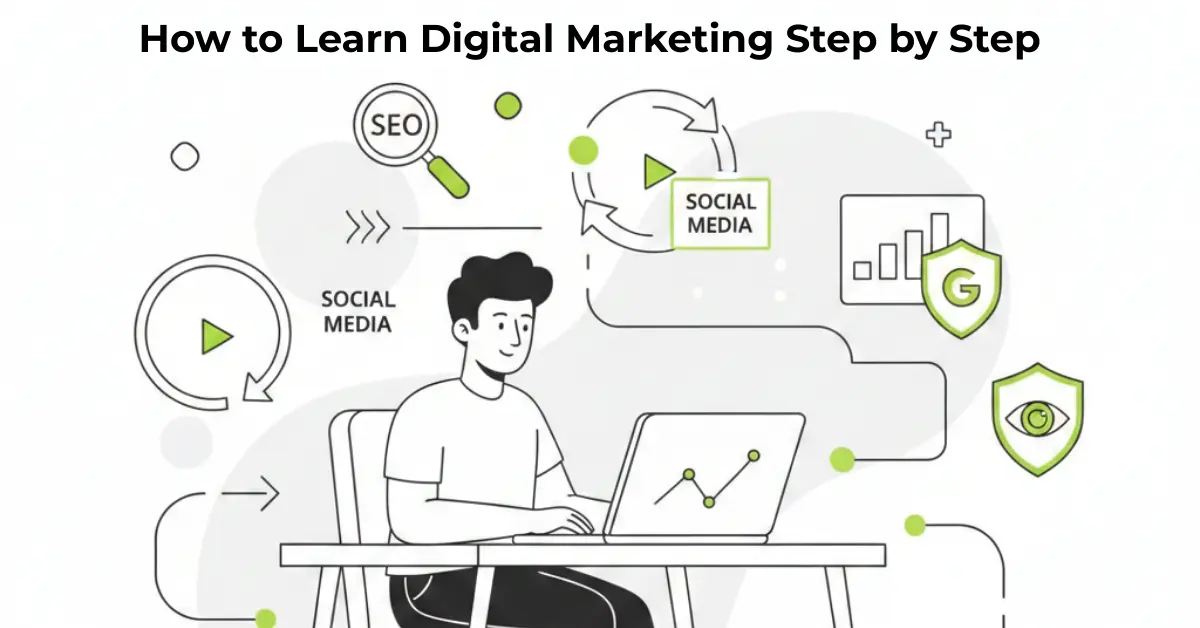
- How to Learn Digital Marketing Step by Step
- What is email marketing?
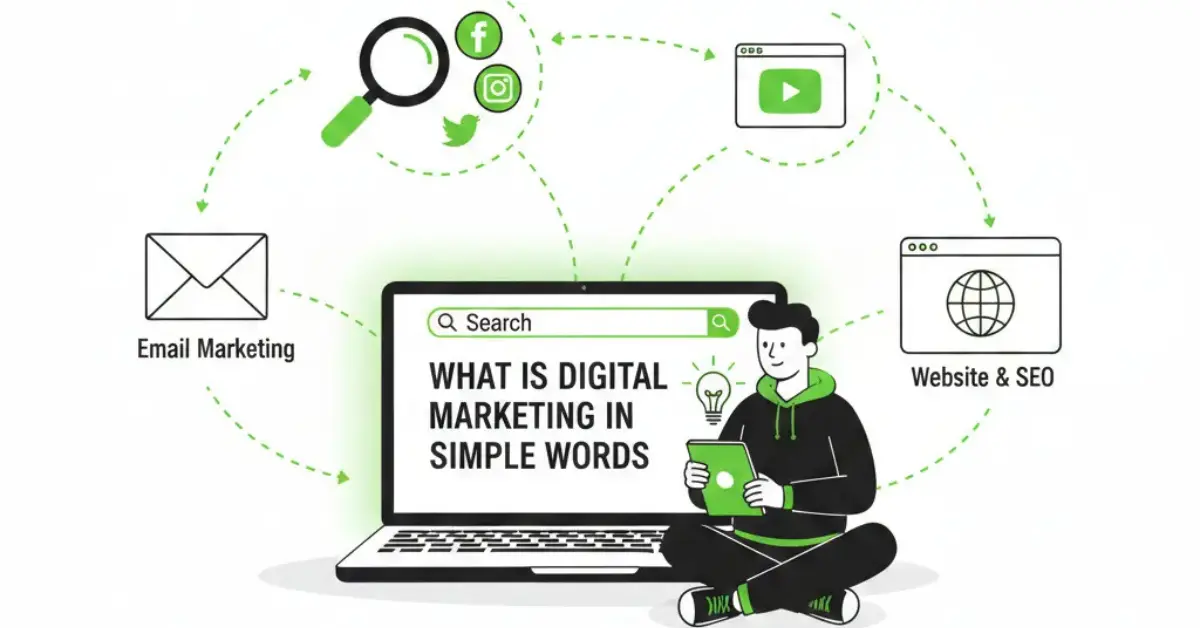
- What is digital marketing in simple words
This is a very clear roadmap for beginners starting digital marketing in 2026. I really like that you focus on fundamentals first (understanding the main channels and the attention–conversion–retention model) before jumping into tools, because that’s exactly what most new marketers skip. Starting with a simple website or “sandbox” project, then practicing SEO, paid ads, email, and analytics on a small scale is one of the fastest ways to build real skills and confidence. Combining that with today’s AI tools for research, copy, and optimization gives beginners a big advantage, as long as they still learn the strategy behind the campaigns instead of relying only on automation