
What Is Content Marketing and Why Is It Important? (Complete Guide 2026)
Content marketing is a strategy in which businesses create and share valuable, relevant content, such as blog posts, videos, and social media posts, to attract and engage their target audience. Rather than pushing ads, it builds trust over time, driving consistent organic traffic, qualified leads, and long-term brand authority that paid advertising cannot replicate.
Think of it this way. Traditional advertising is like a stranger approaching you on the street and saying, “Buy my product!” Content marketing is like a knowledgeable friend who teaches you something useful, and when you eventually need to buy something, you naturally think of them first.
Content marketing is a strategic approach focused on creating and distributing valuable, relevant, and consistent content to attract and retain a clearly defined audience and ultimately drive profitable customer action.
What Is Content Marketing in practical terms? It includes the blog post you are reading right now, the recipe video on a cooking brand’s YouTube channel, the “how-to” Instagram carousel from a skincare company, and the email newsletter from your favourite marketer. All of it is content marketing because its goal is to educate, inform, or entertain before it ever tries to sell.
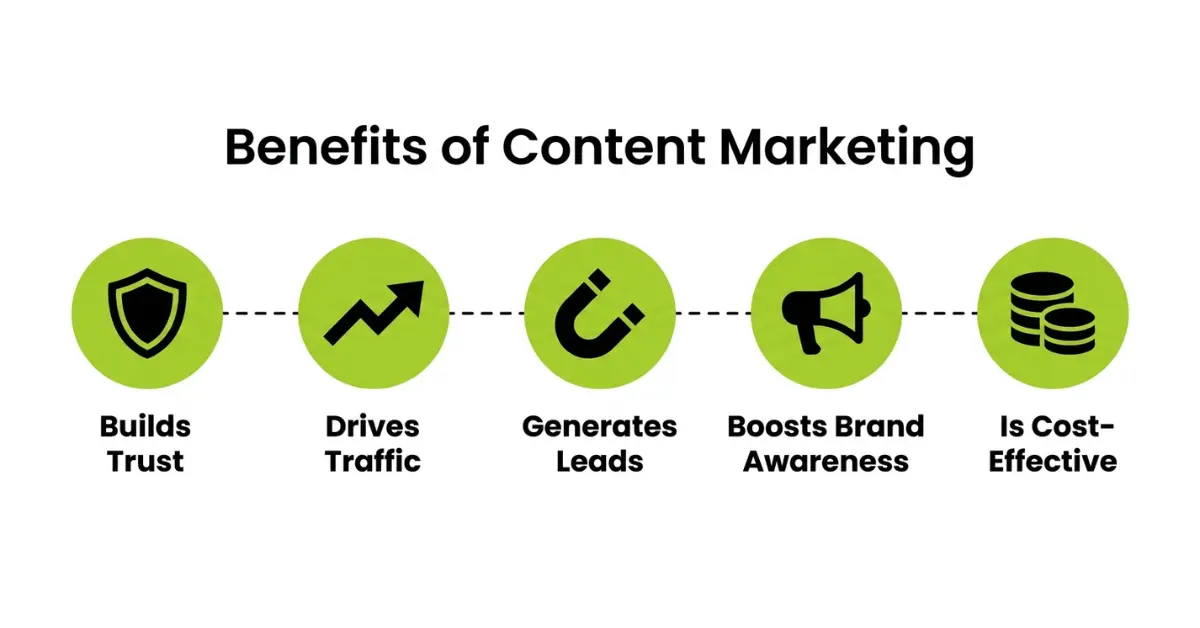
Why Is Content Marketing Important in 2026?
Here is the truth: people are now very good at ignoring ads. Banner blindness is a real issue. Ad blockers are everywhere. No one enjoys a pop-up that takes over the screen before they have even read the first sentence.
This is why content marketing is more important than ever. Instead of interrupting your audience, it gains their attention by being truly helpful. Let’s explore the biggest reasons why content marketing is important in 2026.
1. It Builds Trust and Authority
When you regularly publish helpful content, people start to see you as an expert. Trust is the basis of every buying decision. A study by Edelman found that 81% of consumers need to trust a brand before making a purchase. Content marketing is the best way to build that trust over time, especially for beginners and small businesses competing against larger brands.
2. It Drives Consistent Organic Traffic
One of the biggest benefits of content marketing is what happens after you publish. A well-written blog post can draw visitors from Google for years without any ongoing ad spending. Unlike a paid ad that vanishes when your budget runs out, a great piece of content keeps working for you around the clock.
3. It Generates Qualified Leads
It attracts people who are already looking for what you offer. Someone who finds your “how to run Google Ads for a small business” blog post is a much more qualified lead than someone who sees a random display ad. HubSpot reports that companies that blog generate 67% more leads each month than those that don’t.
4. It Improves Brand Awareness
Every piece of content you publish is a new chance for someone to discover your brand. Whether it’s a YouTube video, an Instagram infographic, or a podcast episode, each one increases your reach without any fixed advertising costs.
5. It Is Far More Cost-Effective Than Paid Ads
Demand Metric found that content marketing costs 62% less than traditional marketing and results in about three times as many leads. For startups, solopreneurs, and small businesses in India and worldwide, this is a game-changer. You do not need a huge budget to compete; you need a steady content strategy.
6. It Supports Every Stage of the Customer Journey
A beginner learning about your brand for the first time needs educational content (awareness). Someone comparing options needs detailed guides (consideration). A ready-to-buy customer needs case studies and reviews (decision). Content marketing is the only channel that can support all three stages at the same time.
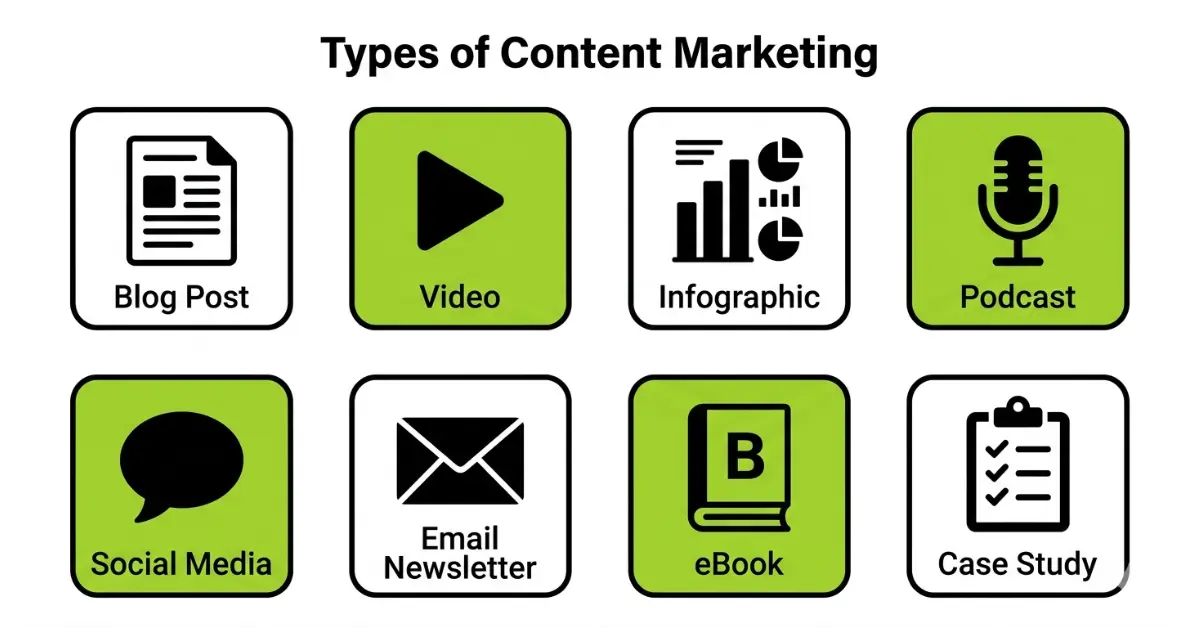
Types of Content Marketing
Types of Content marketing take many forms, and each type aims to attract, engage, and convert audiences in different ways. I choose content formats based on the target audience, platform, and marketing goals. Here are the most effective types of content marketing that businesses use today.
1. Blogging
Blogging is one of the most popular and effective forms of content marketing. Businesses publish informative articles to answer user questions, boost SEO rankings, and establish authority in their field.
Benefits of blog content:
- Increases organic traffic
- Targets SEO keywords
- Builds trust with readers
- Generates long-term website traffic
For example, a digital marketing blog might publish articles about SEO, social media marketing, or paid advertising to attract potential customers.
2. Social Media
Social media platforms help brands connect directly with their audience through engaging and shareable content.
Popular social media content includes:
- Carousel posts
- Reels and short videos
- Infographics
- Stories and polls
- Educational posts
Platforms like Instagram, LinkedIn, Facebook, and X (Twitter) are often used to boost brand awareness and engagement.
3. Video Marketing
Video content is very engaging and helps explain complicated topics simply and visually.
Common types of video content:
- Tutorials
- Product demos
- Explainer videos
- Webinars
- Behind-the-scenes videos
Video marketing helps keep the audience’s attention and performs well on platforms like YouTube, Instagram Reels, and TikTok.
4. Email Marketing
Email marketing helps businesses nurture leads and stay in touch with existing customers.
Examples of email content:
- Newsletters
- Promotional emails
- Product updates
- Educational email series
- Personalized recommendations
It delivers one of the highest returns on investment in digital marketing because it allows direct communication with the audience.
5. Infographic Content Marketing
Infographics present information visually, making complex data easier to understand and share.
Businesses use infographics to:
- Simplify statistics
- Explain processes
- Increase social shares
- Boost audience engagement
Visual content often attracts more attention than plain text.
6. Podcast
Podcasts are growing in popularity among audiences who prefer audio-based learning and entertainment.
Brands use podcasts to:
- Share industry insights
- Interview experts
- Build authority
- Connect personally with audiences
Podcast marketing is effective for personal branding and thought leadership.
7. Ebooks and Guides
Ebooks and downloadable guides offer detailed information on specific topics.
These are commonly used for:
- Generating leads
- Building email lists
- Educating potential customers
- Showcasing expertise
Businesses often provide free ebooks in exchange for user contact information.
8. Case Studies
Case studies show real results achieved through a product, service, or strategy.
A solid case study includes:
- The problem
- The strategy used
- Results achieved
- Key takeaways
Case studies help build credibility and influence buying choices.
9. User-Generated Content (UGC)
User-generated content consists of reviews, testimonials, social media mentions, and content created by customers.
UGC helps:
- Build social proof
- Increase trust
- Improve brand authenticity
- Encourage community involvement
Consumers often trust customer experiences more than traditional advertisements.
10. Interactive Content
Interactive content encourages users to actively participate rather than passively consume.
Examples include:
- Quizzes
- Polls
- Surveys
- Calculators
- Interactive tools
This type of content boosts engagement and increases time spent on a website.
How Content Marketing Helps SEO
Here is a question every beginner asks: Can I do SEO without content marketing? The short answer is no, not effectively. Here is why content marketing helps SEO so powerfully.
- Keyword Targeting: Each blog post is a chance to rank for a new keyword. A website with 200 articles has 200 opportunities to appear in Google search results. A website with no content has no chances.
- Backlink Acquisition: High-quality content earns links from other websites. Backlinks are one of Google’s most important ranking signals. Content that teaches, informs, or surprises people gets shared and linked to.
- Dwell Time and Engagement: When visitors spend more time reading your content, Google sees this as a quality signal. Long, valuable posts reduce bounce rates and increase average session duration; both are positive SEO indicators.
- Fresh Content Signals: Google prefers websites that publish regularly. A consistent publishing schedule shows Google that your site is active, updated, and trustworthy.
- Topic Authority: When you publish a lot of content on one topic—like digital marketing—Google starts to recognize your website as an authority on that subject. This improves rankings across all your pages, not just individual posts.
- Internal Linking: Content marketing gives you material to link within your site, which helps Google crawl it more easily and spreads page authority to your most important pages.
In short, content marketing and SEO are not two separate strategies; they are two sides of the same coin. Without content, SEO has nothing to optimize. Without SEO, your content has no way to reach people.
Content Marketing Examples from Real Brands
Seeing real content marketing examples from successful brands makes the concept much easier to understand.
HubSpot: The Blog That Built a Billion-Dollar Company
HubSpot started publishing free marketing guides and templates before it had a product to sell. Today, their blog attracts over 7 million visitors each month. Their content marketing strategy changed them from a small startup into one of the most recognized names in B2B software.
Red Bull: Content as the Product Itself
Red Bull is arguably the best content marketing example in history. They invested in extreme sports events, YouTube channels, and documentary films. Their slogan, “Red Bull gives you wings”, is not just a tagline; it represents an entire content universe. The energy drink is almost secondary to the media empire they have created.
Blendtec: ‘Will It Blend?’
Blendtec, a blender company, made a YouTube series where they blended iPhones, golf balls, and other unexpected objects. Their “Will It Blend?” series went viral and boosted blender sales by 700%. The total content budget for the first video was $50. This is content marketing at its most creative.
Zomato India: Social Media Mastery
Closer to home, Zomato is a prime example of content marketing on social media. Their witty and relatable tweets and Instagram posts often go viral without any paid promotion. They understand their audience’s feelings—hunger, craving, nostalgia—and create content that connects directly with those emotions.
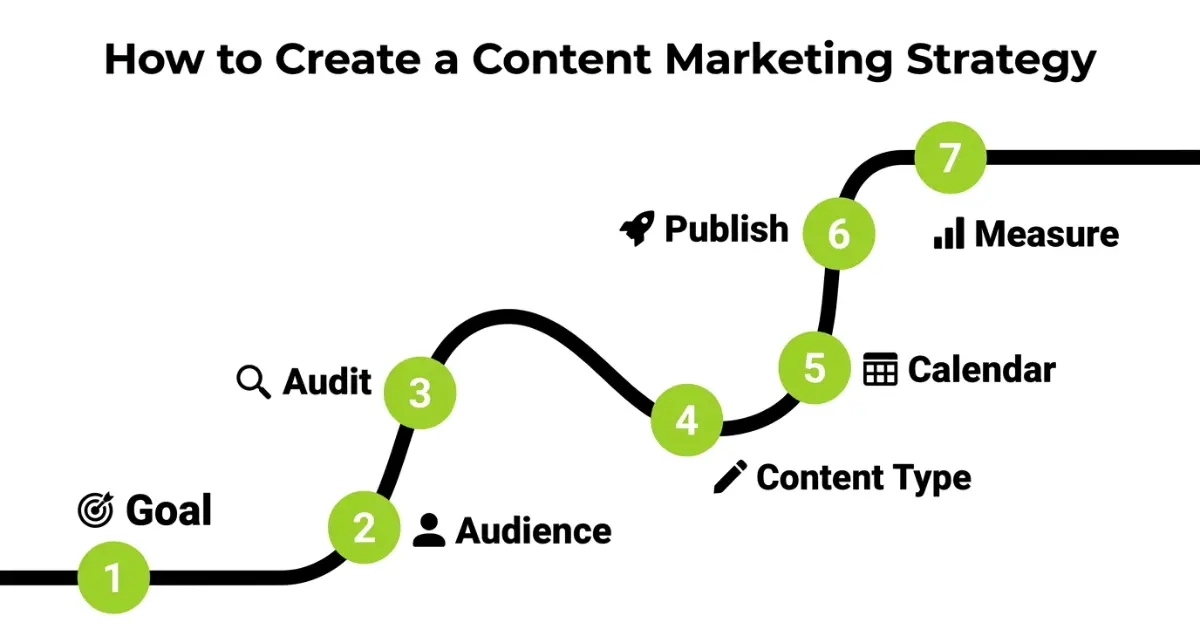
How to Create a Content Marketing Strategy (Step by Step)
Now that you understand what content marketing is and why it matters, let’s discuss how to create a content marketing strategy from scratch, even if you are a complete beginner.
Step 1. Define Your Goals
Before writing anything, ask yourself: what do you want content marketing to achieve? Common goals include increasing website traffic, generating leads, growing an email list, building brand awareness, or improving SEO rankings. Your goals shape every decision that follows.
Step 2. Know Your Audience Inside Out
Great content solves a specific person’s problem. Create a detailed buyer persona. Who are they? What questions do they type into Google? keeps them up at night? What language do they use? The more specific you get, the more powerful your content becomes.
For example, MarketYug targets digital marketing beginners, people who want to learn SEO, social media, WordPress, and paid ads without getting lost in technical jargon. Every article here is created with that person in mind.
Step 3. Audit Your Existing Content
If you already have a website or social media presence, review what you have published. Which pieces performed well? Which ones received no traffic? A content audit shows gaps you can fill and chances to update older posts for better SEO performance in 2026.
Step 4. Choose Your Content Types and Channels
You do not need to be everywhere. Pick 1-2 content types and 1-2 platforms to start. If your audience reads blogs, focus on SEO articles. They watch videos and start a YouTube channel. They scroll through Instagram, create carousels. Starting focused and doing it well is better than stretching yourself too thin.
Step 5. Build a Content Calendar
A content calendar keeps you consistent, and consistency is the biggest predictor of content marketing success. Plan topics, publish dates, target keywords, and who is responsible for each piece. A simple Google Sheets calendar works perfectly for beginners.
Step 6. Create, Publish, and Promote
Creating content is only half the job. Once published, promote it actively; share it on social media, send it to your email list, reach out to other creators for collaboration, and repurpose it into different formats. A single blog post can become an Instagram carousel, a YouTube script, a LinkedIn post, and an email newsletter.
Step 7. Measure Results and Optimize
Use Google Analytics and Google Search Console to track which content drives traffic, leads, and conversions. Focus on what works. Update or remove what does not. Content marketing is a long game, but the brands that track their data and adjust succeed every time.
Frequently Asked Questions About Content Marketing
Q1: What is the goal of content marketing?
The main goal of content marketing is to attract and keep a clearly defined audience by regularly providing valuable information. When they are ready to buy, they will choose you over your competitors.
Q2: How long does content marketing take to work?
Content marketing is a long-term approach. Most businesses start to see noticeable growth in organic traffic within 6 to 12 months of consistent publishing. SEO takes time, but the results build up and last longer than paid advertising.
Q3: What is the difference between content marketing and SEO?
SEO is the technical process of optimizing content so search engines can find and rank it. Content marketing involves creating that content in the first place. They work together. SEO without content has nothing to optimize; content without SEO attracts no organic traffic.
Q4: Can small businesses and beginners do content marketing?
Absolutely. Content marketing is one of the most beginner-friendly strategies out there. You don’t need a big budget; you just need a phone, an internet connection, and a willingness to share your knowledge. MarketYug was built on this principle.
Q5: Is content marketing still effective in 2026?
More than ever. With AI-generated content flooding the internet, high-quality, genuine content backed by experience stands out more than before. Google’s EEAT framework (Experience, Expertise, Authoritativeness, Trustworthiness) rewards real human insight, making authentic content marketing the best SEO strategy in 2026.
Q6: How is content marketing different from social media marketing?
Social media marketing serves as a distribution channel. Content marketing is the overall strategy. You can use social media to share your content marketing, but social media posts alone, without a more detailed content strategy, rarely build lasting authority or drive organic traffic.
Conclusion: Start Your Content Marketing Journey Today
So, what is content marketing and why is it important? It involves creating valuable content that captures your audience’s attention, builds their trust, and turns them into loyal customers. It matters because it consistently works, is cost-effective, and fits how modern buyers make decisions.
Whether you are a solo blogger, a startup founder, or a digital marketer looking to grow your skills, understanding the benefits of content marketing, the types of content marketing, how it works with SEO, and how to develop a strategy is the best investment you can make in 2026.
Here are three things to remember:
• Consistency beats perfection. Start small, publish regularly, and improve over time.
• Value first, promotion second. Teach before you sell, and your audience will trust you completely.
• Measure and adapt. Use data to focus on what works and quickly drop what doesn’t.
Ready to take the next step? Explore more beginner guides on the MarketYug blog. You can find information on SEO fundamentals, social media strategy, and Affiliate Marketing tips, all written in the same simple, beginner-friendly language you’ve been reading here.