What is off-page SEO? Complete Beginner’s Guide
Off-page SEO is all the activity that happens outside of your website to help you rank better in search engine results pages. These activities help search engines to judge the trustworthiness of your website.
Suppose you want to rank your website on Google; understanding what off-page SEO is is extremely important. While on-page SEO focuses on optimising content and website structure, off-page optimization focuses on activities done outside your website to improve search rankings.
Off-page SEO plays a major role in building website authority, trust, and credibility in the eyes of search engines like Google. The stronger your website’s reputation across the internet, the higher the chances of ranking on the first page.
Whether you are a beginner, blogger, or business owner, this guide will help you understand everything about off-page SEO. If you are new to SEO, you will learn first “What is SEO and How it Works“.
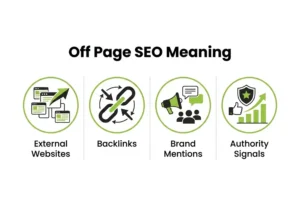
Off-Page SEO Meaning
Before we get into it, let’s first get an idea of what off-page SEO means.
Off-page SEO is all the activities that take place outside your website to improve your ranking on search engine result pages. These activities help search engines judge how trustworthy your website is.
The best example of off-page SEO is backlinks. When other sites link to your website, it is like they have voted for your website.
But, off-page SEO is not limited to backlinks alone.
Other factors that come under include:
- Social media marketing
- Brand mentions
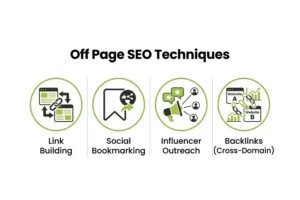
- Influencer marketing
- Guest blogging
- Forum marketing
- Local citations
- Content marketing
All these factors combined show search engines that your website is valuable and trustworthy.
What is Off-Page SEO
To understand off-page SEO, think of Google assessing your website like a reputation system. When other websites mention or link to yours, search engines see those signals as votes of trust.
It includes all the external activities that boost your website’s credibility, authority, and trustworthiness in the eyes of search engines.
Unlike on-page SEO, which focuses on improving elements on your website, such as content, meta tags, and internal links, off-page optimisation aims to enhance signals from outside your website.
These signals include:
- Backlinks from other websites
- Social media engagement
- Brand mentions
- Online reviews
- Influencer references
When several reputable websites link to your content, Google sees those links as evidence that your content is valuable. Consequently, your pages are more likely to rank higher in search results.
In simple terms, off-page SEO helps search engines assess how popular and trustworthy your website is across the internet. If you don’t know what on-page SEO is, you can learn “What is On-Page SEO“.
Off-Page SEO Meaning
Off-page SEO, meaning, is the process of improving a website’s ranking through actions that take place outside the website.
The actions that take place outside the website focus on authority, relevance, and trust.
Several factors that search engines consider when ranking a website. Some of the factors with the highest weightage in search engine ranking include backlinks.
For instance, if the marketing website links to your article, the search engine considers that your article is providing value to the users.
Off-page optimization plays an important role in the search engine ranking algorithm.
The more trustworthy the signals your website receives, the better your SEO results.
Why Off-Page SEO is Important
Knowing why off-page SEO is important is just the beginning. Knowing why it matters for search engine rankings is the next step.
When it comes to how search engines assess your website’s authority.
Off-page SEO is crucial for the following significant reasons:
Increases Website Authority
Search engines regard backlinks as recommendations. Your domain authority rises when credible websites link to your pages.
Boosts Rankings in Search Engines
One of Google’s most crucial ranking factors is still high-quality backlinks.
Boosts Trust in Websites
References and mentions from outside sources demonstrate the legitimacy and dependability of your brand.
Increases Referral Traffic
By directing users to your website, links from other websites can boost traffic and conversion rates.
For brands like MarketYug, building strong off-page SEO signals helps establish credibility in the digital marketing niche.
How to Do Off-Page SEO
Most newbies wonder how to do off-page SEO properly.
Here is the step-by-step guide to performing properly:
1. Build High-Quality Backlinks
Backlinks are one of the strongest ranking signals for your website.
Ways to Build Backlinks:
- Guest Blogging
- Blogger Outreach
- Content Marketing
- Broken Link Building
- Resource Link Building
Always focus on quality backlinks instead of quantity. It is better to have one backlink from a high-authority website than 10 from low-quality websites.
2. Guest Posting
Guest posting is the process of writing articles for other websites in your niche or industry.
The benefits of guest posting are:
- High-Quality Backlinks
- Referral Traffic
- Brand Exposure
Always focus on guest posting for high-authority websites in your niche or industry.
3. Social Media Promotion
Promoting your content on social media platforms is an excellent way to drive traffic to your website.
The most popular social media platforms are:
Even though the backlinks from social media platforms are no-follow, they still benefit brand exposure.
4. Influencer Outreach
You can use influencers in your niche to improve your website’s authority.
You can:
- Share your content
- Mention your brand
- Give backlinks
- Reach a wider audience
5. Forum Participation
You can use niche forums to improve your site’s credibility and get more referral traffic.
Examples:
- Quora
- niche communities
Give answers, but give links when necessary.
6. Local SEO Citations
Citations are necessary if you’re a local business.
This includes:
- Google Business Profile
- Yelp
- Yellow Pages
- Justdial
Off-Page SEO Techniques
There are several proven off-page seo techniques used by professionals to improve website rankings.
Below are some of the most effective strategies.
1. Link Building
Link building is the technique used to get links from other sites.
This is still the strongest off-page SEO technique.
2. Social Bookmarking
Social bookmarking sites provide users with an opportunity to share and discover valuable content.
Some of the major social bookmarking sites include:
- Mix
Sharing your content on these sites is quite effective.
3. Content Marketing
Publishing valuable content, such as guides, infographics, and research articles, will encourage other sites to reference and link to your content.
4. Broken Link Building
This technique requires finding broken links on other sites and replacing them with your content.
This is still one of the best techniques for building links.
5. Brand Mentions
Even though other sites do not link to your site, search engines still consider brand mentions.
Having good brand visibility is important for improving off-page SEO performance.
Off-Page Optimization Strategies for Long-Term SEO
To achieve good results in off-page optimisation, one must always have patience. Instead of focusing on getting instant results, you need the right strategies to support your website’s growth over time.
Some of the best ways that one can use to improve the authority of their website in search results are as follows:
1. Create Link-Worthy Content
Creating good content that provides unique insights, statistics, or solutions is one of the best ways to ensure other websites link to it. Having good content is always beneficial, as it attracts links to your website.
2. Build Strong Industry Connections
Building strong connections with other bloggers, writers, and experts in your niche is one of the best ways to ensure that you have high-quality links. Building strong connections in your industry helps you reach more people, which is always beneficial for your website.
3. Promote Your Content Consistently
Creating good content is just the first step towards achieving good results in search engine optimization. Promoting your content through various online platforms, including social media, helps you reach more people, which is always beneficial for your website.
4. Track and Analyze Backlinks
Regularly monitor your backlinks with SEO tools. This will allow you to track the presence of both beneficial and dangerous backlinks. A strong backlink profile is essential for maintaining strong search engine rankings.
Off-Page SEO Checklist
To make the process easier, here is a useful off-page seo checklist you can use as a guide.
- Create high-quality content
- Build backlinks from other relevant websites
- Write guest posts for other authority blogs
- Promote your articles on social media
- Participate in niche forums and communities
- Share your articles on social bookmarking sites
- Develop relationships with experts in your industry
- Monitor your backlinks regularly
- Encourage brand mentions
- Focus on building authority sites
Using this checklist will help you improve your website’s credibility and ranking.
Common Off-Page SEO Mistakes
During the implementation of off-page techniques, beginners often commit mistakes that can negatively affect search engine rankings.
Avoid the following common mistakes.
Buying Backlinks
Buying backlinks from other low-quality websites can have negative consequences.
Using Spammy Directories
Submitting your website to irrelevant directories can negatively impact your SEO reputation.
Using Too Much Anchor Text
Repeatedly using the same keyword as anchor text can raise red flags for search engines.
A balanced approach is always the best approach.
Future of Off-Page SEO
SEO is an evolving concept, and the focus of techniques is becoming more brand-centric.
Search engines now consider the following factors for ranking your website:
- Brand reputation
- User engagement
- Quality of content
- Expert references
For digital brands like MarketYug, establishing brand reputation through high-quality content and other references is key to search engine optimisation.
Related Guides on Marketyug
On-page SEO is one part of the complete SEO picture. Read these next to build your full understanding:
- What is Technical SEO
- What is On-Page SEO
- What is SEO and How Does It Work
- How to Do SEO Step by Step
- What Are Backlinks
Conclusion
Knowledge of what off-page SEO is important for anyone who wants to improve their website’s ranking.
Off-page seo refers to the process of building trust and credibility through external factors.
By learning the meaning of off-page SEO, developing effective strategies, and applying proven off-page SEO techniques, website owners can improve their search engine presence.
Using an off-page seo checklist will improve domain authority and drive more traffic over time.
With the right approach, you can significantly improve your website’s online presence.